Straight from the cask: how real ale gets from the pub cellar to your glass
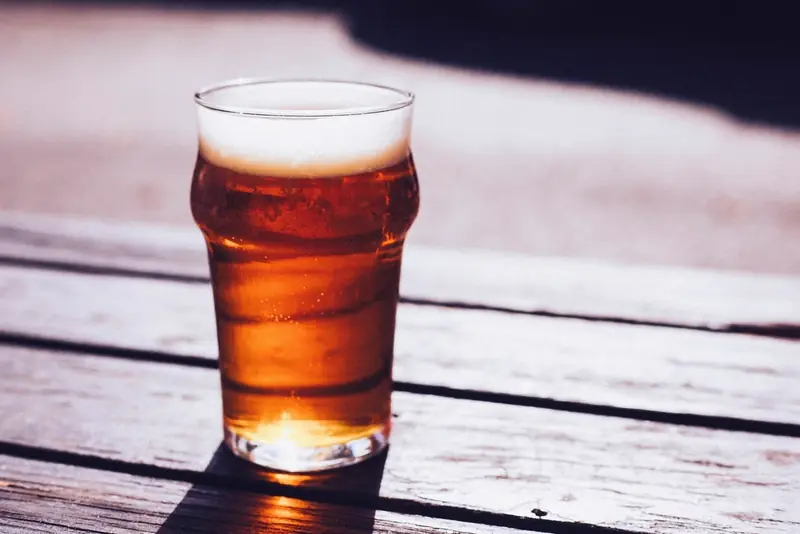
Illustrative photo: a pint of amber beer on a wooden table. Credits
When the Old White Hart described its drinks in the early 2010s, the line that stood out was real ale served directly from the cask (see what the inn was known for). The phrase sounds like marketing, but it describes a specific way of making and serving beer, one that puts much of the final work in the hands of the pub rather than the brewery. Here is what happens to a cask between the brewer's yard and your glass, and why it matters to the pint you are served.
What makes an ale "real"
The term "real ale" was coined in the 1970s by the Campaign for Real Ale (CAMRA), founded in 1971, to distinguish traditional beer from the filtered, pasteurised keg beers that were then spreading through British pubs. CAMRA's definition describes a beer brewed from traditional ingredients and matured by secondary fermentation in the container from which it is dispensed, served without extraneous carbon dioxide.
The key words are secondary fermentation in the container. Cask ale leaves the brewery unfiltered and unpasteurised, with live yeast still in it and some fermentable sugar left to work on. In the cask, that yeast keeps fermenting. It produces a little alcohol and, more importantly, the gentle natural carbonation that gives cask beer its soft texture. Keg beer, by contrast, is finished at the brewery and pushed to the bar by added gas.
This means a cask of real ale arrives at the pub unfinished. It is the cellar, not the brewery, that brings it into condition, which is why two pubs selling the same beer can pour two noticeably different pints.
Inside the cask: shive, keystone and finings
A traditional beer cask has two openings. The shive, on the belly of the cask, is a wooden or plastic bung with a thin central section that can be punched through. The keystone, at one end, is where the tap will go. Most casks today are stainless steel or aluminium, but the names and the method have not changed.
Many brewers add finings before the cask leaves the brewery. The traditional fining is isinglass, a form of collagen made from the swim bladders of fish. Once the cask is at rest, the finings bind with the yeast and other particles and drag them to the bottom, leaving the beer clear. Because isinglass is an animal product, some brewers now sell unfined or vegan-fined cask beer; an unfined beer may be deliberately hazy, and quality assessors take that into account (how the Cask Marque plaque is earned).
Sizes are worth knowing because they explain why small pubs choose some beers and not others. The workhorse is the firkin, nine imperial gallons, or 72 pints. The pin holds half that, the kilderkin twice that. A pub that sells a beer slowly will want it in a smaller cask, because once a cask is opened the clock starts running.
In the cellar: stillage, venting and settling
When a cask arrives, the cellar keeper lays it on its side on a rack called a stillage, shive uppermost, usually tilted slightly forward so the last of the beer can be drawn off later. Then the cask is left alone. Moving it again would stir the sediment back up.
Next comes venting. A soft spile, a small porous peg traditionally made of wood, is driven through the centre of the shive. It lets excess carbon dioxide from the secondary fermentation escape slowly. A very lively cask may hiss and foam at this point; a quiet one may barely respond. Once the beer has reached the right level of condition, the soft spile is swapped for a hard spile, which is not porous and keeps the remaining carbonation in. Cellar keepers swap spiles during service: soft while beer is being drawn, so air can replace it, hard overnight, to hold the condition.
The tap is driven into the keystone, and the beer is left to settle while the finings do their work. How long that takes depends on the beer and on the brewer's instructions, but it is usually counted in a day or more, not in hours. A good cellar keeper draws a small sample and checks it for clarity, aroma and taste before the beer goes on sale.
All of this is a matter of judgement. Brewers publish cellar instructions for their beers, and practice varies from one cellar to the next. What follows from it is simple: a pub that serves cask ale well is a pub that looks after its cellar.
Temperature: cool, not cold
Cask ale is served at cellar temperature, which is cooler than room temperature and warmer than most lagers. For a pub to score fully on a Cask Marque visit, the beer must be dispensed at between 10 and 14°C, a range most major brewers recommend. Too warm and the beer tastes flabby and loses its condition quickly; too cold and the aroma and flavour are muted and haze can appear.
This is why old pub cellars were dug below ground, where the temperature stays fairly steady through the year, and why modern cellars are usually cooled. It is also why the line from cellar to bar matters: beer that sits in a warm pipe between pours is no longer at cellar temperature by the time it reaches the glass.
From cellar to bar: the handpump
Cask ale is not pushed to the bar by gas. It is either poured straight from a cask on or behind the bar, known as gravity dispense, or drawn up from the cellar by a beer engine: the tall handpump you see on the counter. Each pull of the handle works a simple pump that lifts beer through a pipe to the spout. Mechanical beer engines go back to the late 17th century in London.
The spout may end in a swan neck, a long curved tube that reaches the bottom of the glass, sometimes fitted with a sparkler, a nozzle with tiny holes that forces the beer through and builds a tight, creamy head. Sparklers are traditionally more common in the north of England than in the south. Some drinkers say they dull the hop aroma; others prefer the smoother texture. Neither side is wrong, and many pubs will take the sparkler off if asked.
Some pubs fit a cask breather, which lets a little carbon dioxide at very low pressure into the cask to replace the beer drawn off, so the beer keeps longer. CAMRA long opposed the device and changed its position in 2018, when it allowed pubs using breathers to be listed in its Good Beer Guide.
Why cask ale has a short life
Once a cask has been vented and tapped, air begins to replace the beer that is drawn off, and the beer starts to lose its condition and to oxidise. Most brewers advise selling a cask within a few days of opening it. That is the economics of real ale in a nutshell: a pub needs enough customers to finish each cask while it is at its best, which is why a small pub may carry fewer cask beers than a large one, and why the choice changes from week to week.
How to tell a well-kept pint
- It looks right. Clear, unless the pump clip or the bar staff say it is meant to be hazy.
- It smells fresh. Malt, hops, fruit or spice, depending on the style. A sour, vinegary or cardboard smell suggests a cask that has been on too long.
- It is cool. Cooler than the room, but not chilled.
- It has some life. Cask ale is gently carbonated, not flat. A pint with no condition at all has usually been vented too long or kept too warm.
If a pint is not right, say so at the bar. Pubs that care about cask ale would rather know, and replacing a pint from a tired cask is a normal part of the trade.
Llantwit Major's square has long been lined with inns (a short history of the square), and the method behind a pint of cask ale has changed little in that time: it still depends on a cool cellar, a patient cellar keeper and enough drinkers to finish the cask.
Sources
- Cask Marque — about the scheme (dispense temperature and the tests on each beer)
- Beer engine (history of the handpump, swan necks and sparklers)
- Real ale (CAMRA's definition and the 2018 change on cask breathers)